Masters in Biotechnology in UK
Table of Contents
- Top Universities for Masters in Biotechnology in UK
- Course Structure of Masters in Biotechnology in UK
- Popular Specializations in Masters in Biotechnology in UK
- Eligibility criteria for Masters in Biotechnology in UK
- Cost of Studying Masters in Biotechnology in UK
- Scholarships for Masters in Biotechnology in UK
- Masters in Biotechnology in UK Intakes and Admission Deadlines
- How to Apply for Masters in Biotechnology in UK
- Student Visa Requirements for Masters in Biotechnology in UK
- Top Cities for Masters in Biotechnology in UK Students
- Job Opportunities After Masters in Biotechnology in UK
- Top Recruiters for Masters in Biotechnology in UK Graduates
- Conclusion
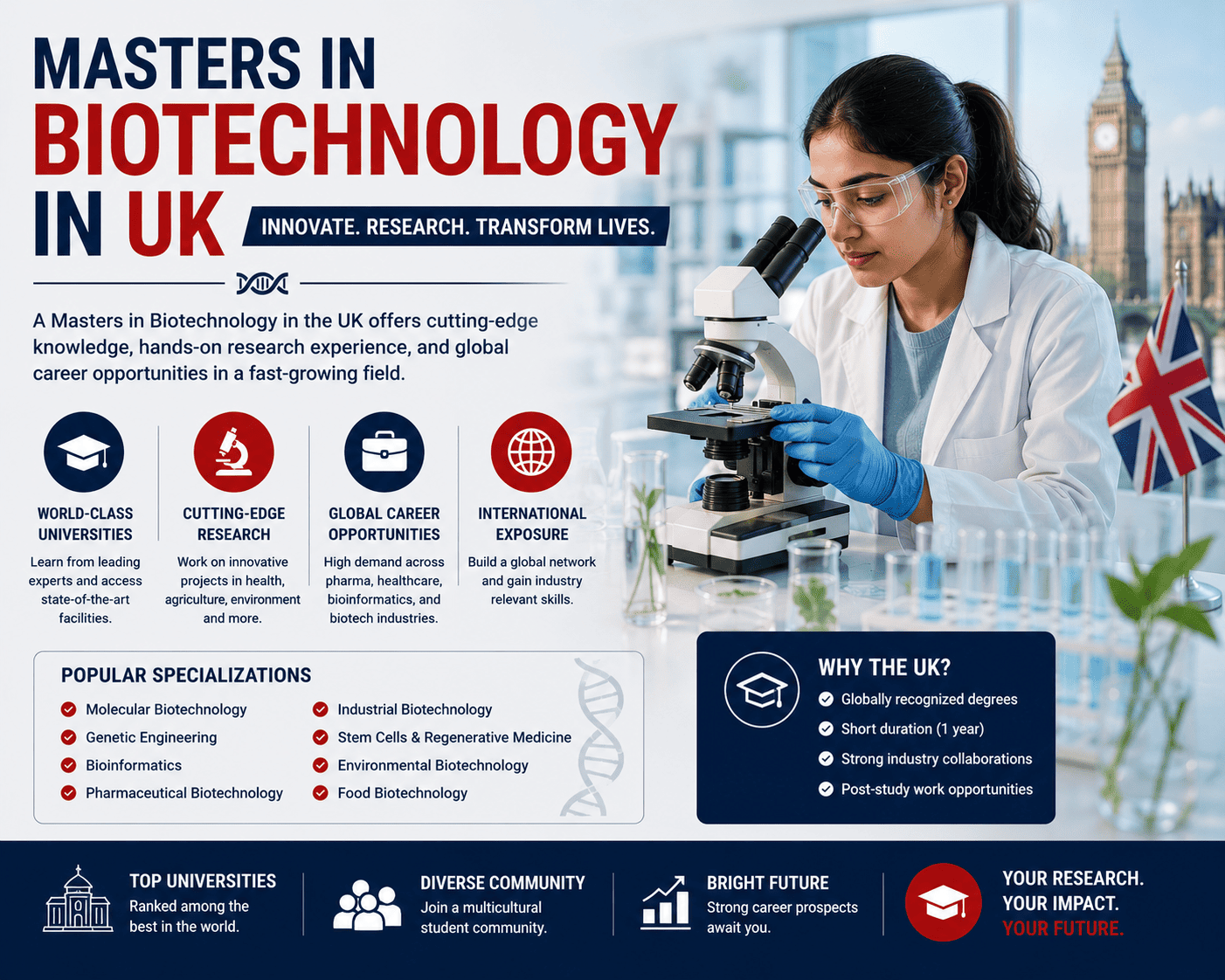
UK offers Masters in Biotechnology, a renowned postgraduate program for students interested in biotechnology, genetics, pharmaceuticals, bioinformatics and life sciences. The postgraduate degree is a one year program (2 years with an optional placement) blending advanced molecular bioscience with commercial enterprise. The tuition fees ranges between £15,000 to £40,000 (approximately ₹21 lakh–₹47 lakh). Masters in Biotechnology in UK is excellent for it’s academic and career prospects with strong research opportunities and growing demand for biotechnology professionals.
Read a quick overview on Masters in Biotechnology from UK:
Particulars | Details |
Degree Awarded | MSc Biotechnology |
Duration | 1–2 Years |
Language of Instruction | English |
Annual Tuition Fees | £15,000–40,000 (₹21 lakh–₹47 lakh) |
Annual Living Costs | £12,000–18,000 (₹14 lakh–₹21 lakh) |
Popular Intakes | September, January |
IELTS Requirement | 6.5–7.0 |
Top Specializations | Bioinformatics, Genetics, Molecular Biology |
Graduate Visa | Up to 2 Years |
Average Graduate Salary | £30,000–60,000 (₹35 lakh–₹70 lakh) |
Top Universities for Masters in Biotechnology in UK
UK universities has access to world class laboratories, interdisciplinary research projects and collaborations with pharmaceutical and biotechnology companies. Students pursuing Masters in Biotechnology in UK get globally recognized degrees along with strong industry connections supporting research and career growth.
This table highlights top universities offering Masters in Biotechnology in UK:
University | QS World University Rankings 2026 |
University of Oxford | #4 |
University of Cambridge | #6 |
Imperial College London | #2 |
University College London (UCL) | #9 |
University of Edinburgh | #34 |
King's College London | #40 |
University of Manchester | #35 |
University of Glasgow | #79 |
University of Nottingham | #97 |
University of Warwick | #74 |
Course Structure of Masters in Biotechnology in UK
The curriculum for Masters in Biotechnology in UK emphasizes modern biotechnology techniques, molecular biology, genetic engineering and bioinformatics. Students gain hands on experience through laboratory work and dissertations that prepare them for careers in research, pharmaceuticals and biotechnology industries. The table below outlines the course structure:
Semester/Phase | Course Structure |
Semester 1 | Molecular Biology, Genetics, Biochemistry |
Semester 2 | Bioinformatics, Genomics, Biotechnology Applications |
Semester 3 | Research Methods and Electives |
Final Phase | Dissertation or Research Project |
Popular Specializations in Masters in Biotechnology in UK
Masters in Biotechnology in UK offers several specializations which caters to the evolving scientific and industry demands. From a variety of specialization to choose from students have the option to match their career goals with their interest:
Specialization | Focus Area |
Molecular Biotechnology | Gene Expression and Cellular Mechanisms |
Bioinformatics | Computational Biology and Data Analysis |
Industrial Biotechnology | Bioprocessing and Manufacturing |
Genetic Engineering | DNA Modification and CRISPR |
Pharmaceutical Biotechnology | Drug Development and Therapeutics |
Environmental Biotechnology | Sustainable Technologies |
Medical Biotechnology | Disease Diagnosis and Treatment |
Eligibility criteria for Masters in Biotechnology in UK
Admission for Masters in Biotechnology in UK programs are highly competitive and require academic excellence and scientific aptitude. Universities evaluate applicants based on educational background, research interests and English language proficiency. Students with strong foundations in biological sciences, biotechnology or related disciplines are generally well positioned for admission. The table below outlines academic requirements:
Requirement | Typical Criteria |
Bachelor's Degree | Required |
Preferred Background | Biotechnology, Biology, Biochemistry, Life Sciences |
Minimum Academic Score | 60–75% or Equivalent |
Research Experience | Preferred |
Statement of Purpose | Required |
Letters of Recommendation | Usually Required |
English Language Requirements for Masters in Biotechnology in UK
English language proficiency is a must for international students applying to Masters in Biotechnology in UK programs. The following table highlights the score requirement for different tests:
Test | Typical Score Requirement |
IELTS Academic | 6.5–7.0 |
TOEFL iBT | 90–100 |
PTE Academic | 60–70 |
Duolingo English Test | Accepted by Selected Universities |
Cost of Studying Masters in Biotechnology in UK
Masters in Biotechnology in UK includes tuition fees and living expenses. Costs varies depending on university ranking, city of residence and lifestyle choices.
The following table outlines tuition fee range based on university reputation, program specialization and research facilities available to students:
University Tier | Approximate Annual Tuition Fees |
Top-Tier Universities | £30,000–40,000 (₹35 lakh–₹47 lakh) |
Mid-Tier Universities | £22,000–30,000 (₹26 lakh–₹35 lakh) |
Affordable Universities | £18,000–22,000 (₹21 lakh–₹26 lakh) |
Cost of Living in UK for Masters in Biotechnology Students
Living costs differ across UK cities like London has the highest living expenses, where as cities such as Glasgow, Nottingham and Manchester are comparatively affordable. The following table gives you a clear idea on how you can budget annually :
Expense Category | Approximate Annual Cost |
Accommodation | £6,000–10,000 (₹7 lakh–₹12 lakh) |
Food and Groceries | £2,000–3,000 (₹2.3 lakh–₹3.5 lakh) |
Transportation | £800–1,500 (₹93,000–₹1.8 lakh) |
Health Surcharge | £776 (₹91,000) |
Personal Expenses | £2,000–3,500 (₹2.3 lakh–₹4.1 lakh) |
Total Approximate Cost | £12,000–18,000 (₹14 lakh–₹21 lakh) |
Scholarships for Masters in Biotechnology in UK
Many scholarship programs offers fee waiver for Masters in Biotechnology in UK like UK government and external organizations offer merit based and need based scholarships for talented biotechnology students from across the world. The table below highlights popular scholarships available for Masters in Biotechnology in UK.
Scholarship | Eligibility | Coverage |
Chevening Scholarships | Leadership Potential and Academic Excellence | Full Tuition, Living Expenses, Travel |
GREAT Scholarships | Eligible International Students | Up to £10,000 (₹11.7 lakh) |
Commonwealth Scholarships | Students from Eligible Countries | Full or Partial Funding |
Gates Cambridge Scholarship | Outstanding Applicants at Cambridge | Full Funding |
Imperial College Scholarships | Merit-Based Students | Partial Tuition Waiver |
Edinburgh Global Scholarships | International Students | Tuition Reduction |
UCL Graduate Scholarships | High Academic Achievement | Partial Funding |
Government Scholarships for Masters in Biotechnology in UK
Government funded scholarships are among the most prestigious opportunities for students pursuing biotechnology in the UK. These scholarships recognize academic excellence, leadership qualities and future contributions to society:
Scholarship | Coverage |
Chevening Scholarship | Full Funding |
GREAT Scholarships | Up to £10,000 (₹11.7 lakh) |
Commonwealth Scholarship | Tuition and Living Support |
University Scholarships for Masters in Biotechnology in UK
Leading universities in the UK offer institutionvspecific scholarships for biotechnology students. These awards may automatically consider eligible applicants or require separate applications.
University | Scholarship Type |
University of Oxford | Graduate Scholarships |
University of Cambridge | Gates Cambridge Scholarship |
Imperial College London | Master's Scholarships |
UCL | Graduate Scholarships |
University of Edinburgh | Global Scholarships |
Masters in Biotechnology in UK Intakes and Admission Deadlines
Universities in UK offering Masters in Biotechnology primarily admit students during the September intake, although some institutions may offer January admissions for selected programs. Students should start preparing applications at least 8–12 months before their intended intake. Below table outlines the admission cycles:
Intake | Application Timeline | Availability |
September Intake | October–June | Most Programs |
January Intake | May–November | Selected Universities |
How to Apply for Masters in Biotechnology in UK
A well-planned application strategy has higher scope of admission and scholarship opportunities for Masters in Biotechnology in UK. Follow these steps chronologically to successfully start with your admission process:
Step 1: Research Masters in Biotechnology in UK Programs
Compare universities based on rankings, research facilities, curriculum, faculty expertise, tuition fees and graduate employment outcomes before shortlisting programs.
Step 2: Check Eligibility Requirements
Review academic qualifications, language requirements, research prerequisites and program specific criteria to ensure they meet admission standards.
Step 3: Prepare English Language Test Scores
Take IELTS, TOEFL, PTE Academic or other accepted examinations and aim for scores that exceed minimum university requirements.
Step 4: Gather Required Documents
Prepare transcripts, degree certificates, statements of purpose, recommendation letters, resumes and supporting research experience documentation.
Step 5: Submit University Applications
Complete applications accurately through official university portals before deadlines, ensuring all supporting materials are uploaded successfully.
Step 6: Apply for Scholarships
Explore university scholarships, government funding opportunities and external grants to reduce overall educational expenses.
Step 7: Accept Admission Offer and Apply for Visa
Once admitted, confirm enrollment, pay deposits if necessary and begin the UK student visa application process.
Student Visa Requirements for Masters in Biotechnology in UK
The visa permits students to reside in the UK throughout their studies and may also provide access to post study work opportunities under the Graduate Route. The table below outlines the key visa requirements.
Requirement | Details |
Confirmation of Acceptance for Studies (CAS) | Required |
Valid Passport | Required |
Proof of Financial Support | Required |
English Language Test Scores | Required |
Tuberculosis Test | Required for Selected Countries |
Visa Application Fee | Applicable |
Immigration Health Surcharge | Required |
Steps to Obtain a UK Student Visa
You can start your visa process after receiving admission confirmation from your college. Follow these steps to for a smooth journey for visa arrangement:
Receive a Confirmation of Acceptance for Studies (CAS) from the university. This document confirms admission and is mandatory for visa applications.
Prepare financial evidence demonstrating the ability to cover tuition fees and living expenses. Proof of funds is essential for visa approval.
Complete the online visa application and pay the required fees, including the Immigration Health Surcharge. Accurate submission helps avoid delays.
Schedule and attend a biometric appointment at an approved visa application center. Students may also need to provide additional supporting documents.
Receive visa approval and finalize travel plans to the UK before the academic session begins. Students should also arrange accommodation before arrival.
Top Cities for Masters in Biotechnology in UK Students
Many UK cities are known for strong biotechnology ecosystems, research institutions, and pharmaceutical industries. Consider university reputation, industry presence and cost of living when selecting a city for your degree program.
The table below highlights popular student cities.
City | Advantages |
London | Leading Research Institutions and Biotech Companies |
Cambridge | World-Class Biotechnology Ecosystem |
Oxford | Strong Academic and Research Excellence |
Edinburgh | Growing Life Sciences Sector |
Manchester | Affordable Living and Research Opportunities |
Glasgow | Expanding Healthcare and Biotechnology Industry |
Job Opportunities After Masters in Biotechnology in UK
The increasing importance of biotechnology in medicine and sustainability continues to drive demand for skilled professionals. The UK biotechnology sector offers strong career growth prospects and competitive salaries for graduates with advanced scientific expertise. The table below highlights popular job roles after completing Masters in Biotechnology in UK.
Job Role | Approximate Annual Salary |
Biotechnologist | £28,000–45,000 (₹33 lakh–₹53 lakh) |
Research Scientist | £30,000–50,000 (₹35 lakh–₹59 lakh) |
Bioinformatics Analyst | £35,000–55,000 (₹41 lakh–₹64 lakh) |
Clinical Research Associate | £30,000–50,000 (₹35 lakh–₹59 lakh) |
Regulatory Affairs Specialist | £35,000–60,000 (₹41 lakh–₹70 lakh) |
Quality Control Analyst | £28,000–45,000 (₹33 lakh–₹53 lakh) |
Pharmaceutical Scientist | £35,000–60,000 (₹41 lakh–₹70 lakh) |
Biomedical Scientist | £30,000–50,000 (₹35 lakh–₹59 lakh) |
Top Recruiters for Masters in Biotechnology in UK Graduates
Graduates of Masters in Biotechnology in UK are placed in healthcare industry by pharmaceutical companies, biotechnology firms, healthcare organizations and research institutions.
Sector | Major Recruiters |
Pharmaceuticals | AstraZeneca, GSK, Pfizer |
Biotechnology | Illumina, Thermo Fisher Scientific |
Healthcare | NHS, Roche |
Research | Wellcome Trust, UK Research and Innovation |
Consulting | Deloitte Life Sciences, PwC |
Conclusion
Masters in Biotechnology in UK offers students access to world-class education, cutting-edge research facilities, and strong industry collaborations. With globally ranked universities, diverse specializations, scholarship opportunities, and post-study work pathways, the UK remains one of the leading destinations for biotechnology education.
Graduates benefit from excellent career opportunities in pharmaceuticals, healthcare, bioinformatics, and research sectors while gaining internationally recognized qualifications. Whether aiming for industry roles or academic research, Masters in Biotechnology in UK provides a strong foundation for long-term professional success.
Book a free 1:1 counselling session with us today, to receive assistance in your admission process for Masters in Biotechnology UK